English
Listen
MENU

Items in the exhibition

Designer Steve Tamayo about items in the collection

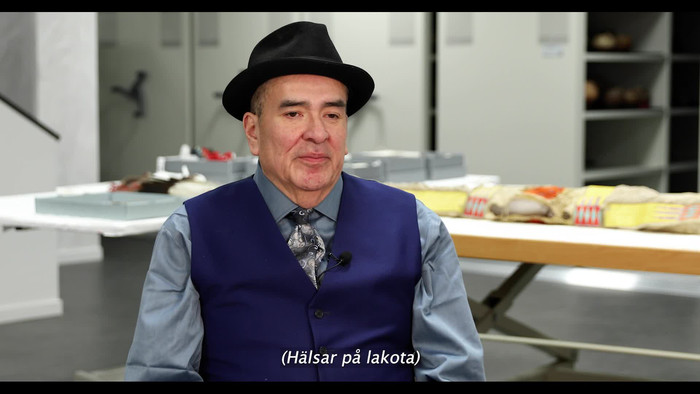
In the film, Steven Tamayo, Sicangu Lakota, consultant and artist, talks about how items in museum collections tell stories of a diversity of cultures and traditions. Steven Tamayo is a frequently consulted expert on North American Indigenous cultures and the founder of the Bluebird Cultural Initiative.
Elk tooth dress

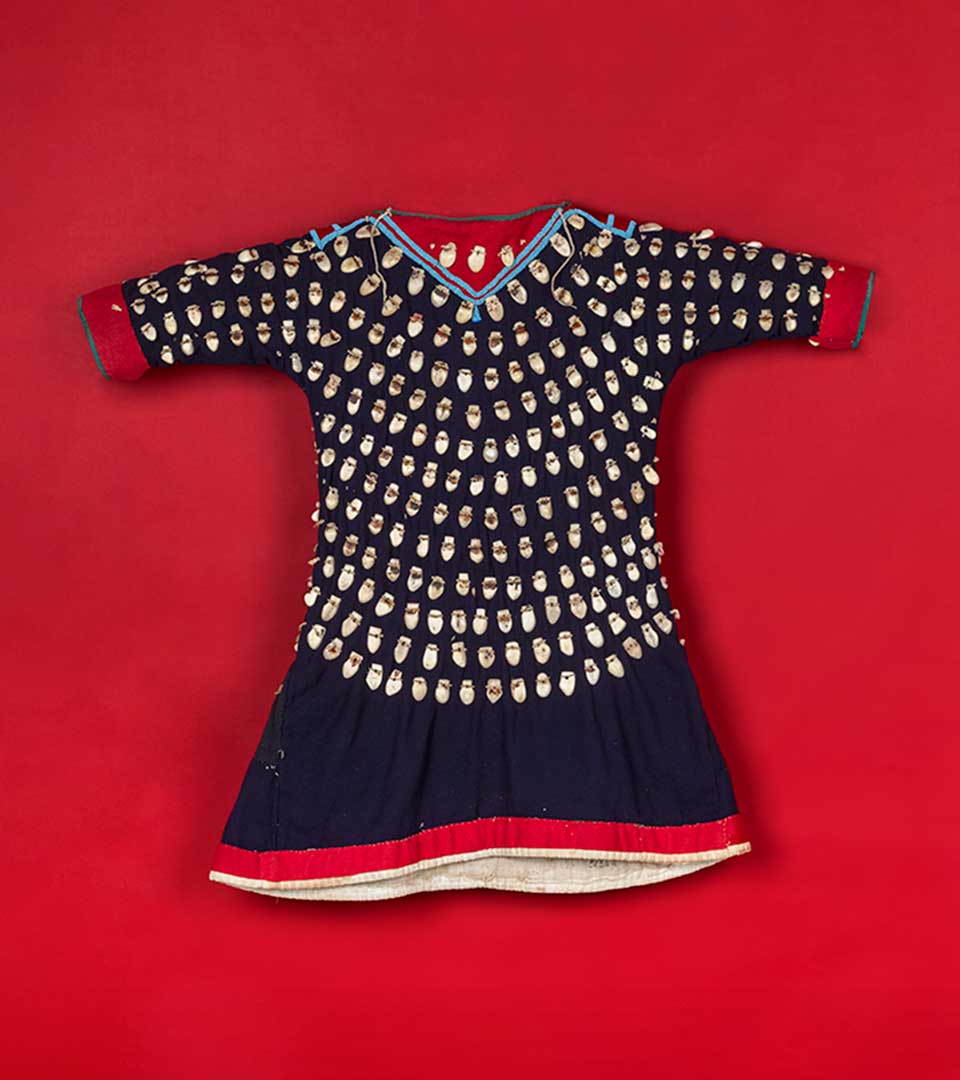
Elk Tooth Dress

Apsalokee

"The elk teeth carry the teachings and blessings of my family and our ancestors. They are not just decorations—they are sacred, and they remind me of where I come from... Even today, many of us still use real elk teeth in our jewelry, regalia, and ceremonies." - Angela Howe-Parrish, Apsáalooke.

A dress adorned with many elk teeth is a valuable garment. The number of teeth on this dress shows it belonged to a girl from a family of very high status. The teeth could take years to collect, as an elk has only two of these canine teeth.

Bandolier bag

Bandolier Bag

Anishinaabe

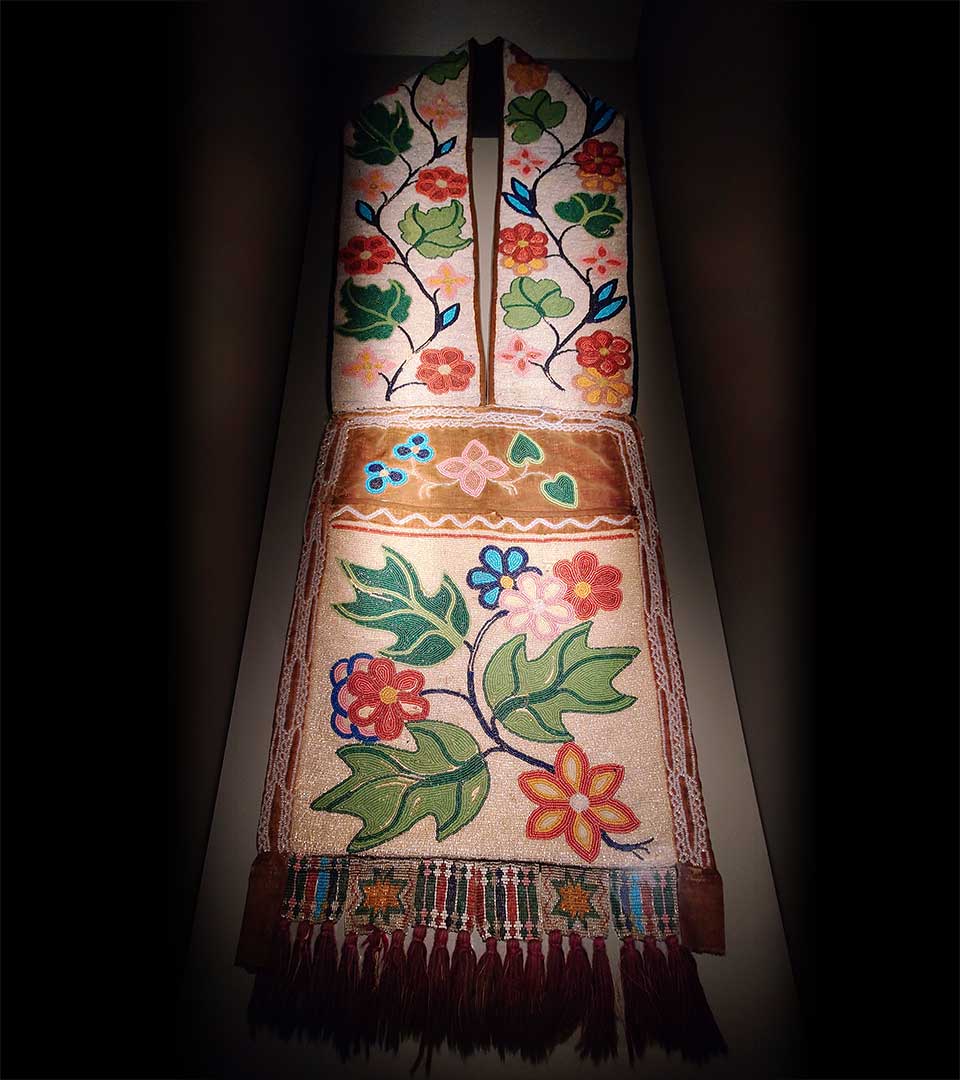
The Anishinaabe* call this beaded shoulder bag a Gashkibidaagan. The bag, characteristic of the Great Lakes region, was part of proper male attire. Worn at ceremonies and other important occasions, they signified status, leadership, and respect. They were also given as gifts and primarily made from the late 1800s to the early 1900s, both with and without storage compartments. European soldiers’ ammunition pouches, known as bandoliers, inspired the shape of the bag. The bags are still made today and are worn, for example, at powwows.

*Anishinaabe is a group of culturally related Indigenous peoples in the Great Lakes region of Canada and the US.

Teckningar

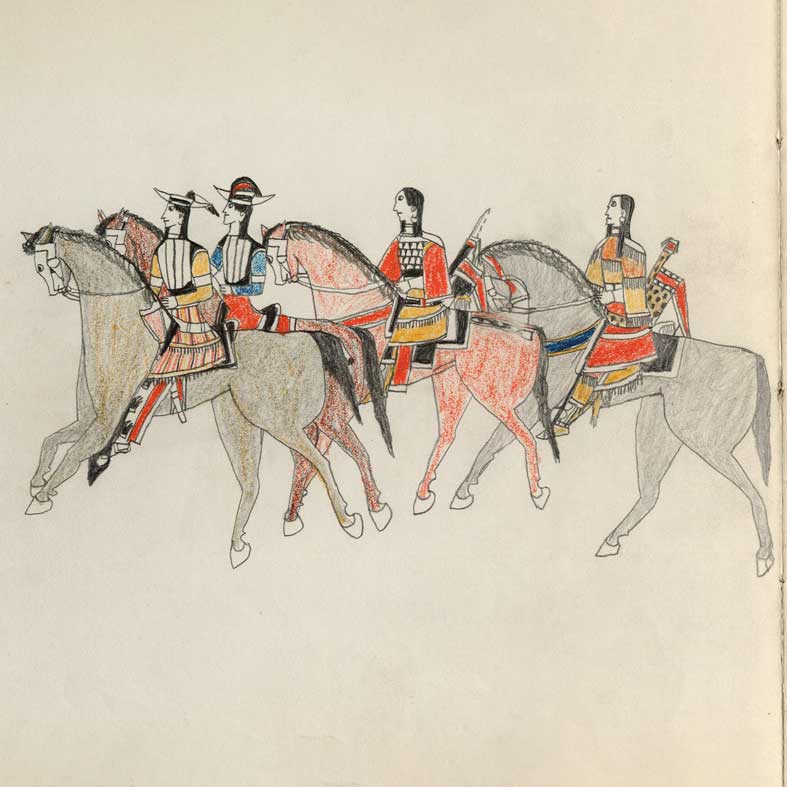
Drawings by Etahdleuh Doanmoe

Kiowa

Etahdleuh Doanmoe created these images while imprisoned at Fort Marion in St. Augustine, Florida.

Men from North American Plains cultures have a long tradition of documenting events through images, often on materials such as stone, buffalo hides, and tipi tents. Their drawings depict warriors’ achievements, hunting, ceremonies, and everyday life, serving both as historical documentation and personal narratives. In the late 1800s, Native Americans were forced off their land into reservations. Refusal meant imprisonment at various forts, one of the most common being Fort Marion in St. Augustine, Florida. The lack of access to traditional materials led this visual documentation to shift to discarded accounting books, so-called ledgers.

In the film, Steven Tamayo, Sicangu Lakota, consultant and artist, talks about how items in museum collections tell stories of a diversity of cultures and traditions. Steven Tamayo is a frequently consulted expert on North American Indigenous cultures and the founder of the Bluebird Cultural Initiative.